+91 8780928142
 +1 (415) 234 7510
 WhatsApp
 Email
Email

































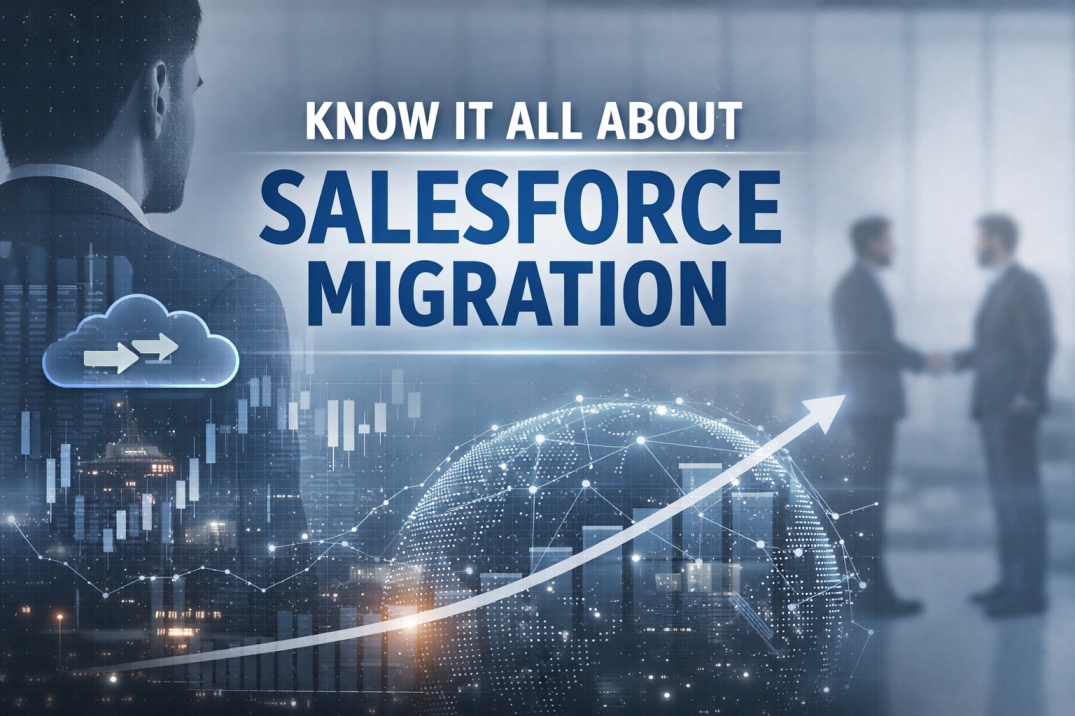
Table of Contents
Are you planning a Salesforce migration? Then, one of the first questions you are likely asking is how long does Salesforce migration take. Closely followed by questions like what affects the Salesforce migration timeline, how much does Salesforce migration cost and how many people are needed for a Salesforce migration project.
These are not technical questions. They are business questions. And they are being searched thousands of times every month by decision-makers. They could be across the US, UK and Middle East as well as elsewhere, because they all want clarity before committing budgets, teams and timelines.
Why? Because, Salesforce is one of the best strategic platforms that touches sales operations, service delivery, customer experience as well as analytics. A poorly planned migration can significantly impact revenue and productivity. On the other side, a thoughtfully executed one can boost CRM adoption, efficiency and competitive advantage.
Today, team Techcronus is here to provide you with a realistic Salesforce migration timeline. Along with that we will explain how to plan resources effectively. We will highlight risks and delays plus show how to structure your project so you achieve value quickly and reliably.
Why Timeline Planning Really Matters
Salesforce migration is not a single task. it is a transformation initiative. According to industry projections, the Salesforce ecosystem is expected to contribute significantly to global business revenue and job growth. Did you know that the Salesforce economy forecast to create 11.6 million jobs and $2.02 trillion in new business revenues between 2022 and 2028?
Yet despite Salesforce’s prominence, CRM migrations often run over schedule. This is because organizations underestimate complexity, data quality challenges and integration requirements. Gartner and other IT research bodies consistently highlight this fact that the projects without strategic planning are far more likely to overrun timelines and budgets.
A realistic timeline helps manage not only technical tasks but also business change, data readiness and stakeholder adoption. All of these are critical for your success right?
Typical Salesforce Migration Timeline: What You Should Expect
While timelines vary by organization size and complexity, most Salesforce migration projects fall into three broad categories:
- Small business migration: 4–8 weeks
• Mid-market migration: 8–16 weeks
• Enterprise migration: 3–6+ months or longer
What drives these differences is not just data volume, but also:
- Number of systems being replaced
- Integrations with external apps and ERPs
- Regulatory and compliance needs
- Level of customization or automation
Realistic Breakdown of a Well-planned Salesforce CRM Migration Timeline
Phase 1: Discovery & Assessment (2–4 Weeks)
The first phase defines the entire project scope. And this in turn affects how long Salesforce migration takes. This phase establishes realistic expectations for resource planning and timeline estimation. Projects that skip or compress discovery are far more likely to suffer delays and data issues later in the project.
Activities include:
- Auditing your current CRM and data sources
- Mapping business processes and critical integrations
- Identifying regulatory/compliance requirements
- Defining data quality and transformation needs
Phase 2: Data Analysis and Cleansing (3–6 Weeks)
Data is often the most underestimated aspect of a Salesforce migration. Industry research shows that poor data quality can erode as much as 15% of revenue annually and significantly inflate project timelines if not corrected early. Data cleansing and preparation is critical before any technical migration begins
Legacy CRMs typically contain:
- Duplicate records
- Outdated contacts
- Incomplete data
- Inconsistent formats
Phase 3: Configuration & Customization (4–10 Weeks)
Once data is ready, the Salesforce environment must be configured. What does that mean – tuning in to reflect your business workflows. Configuration time varies significantly depending on the number of custom objects and business rules involved.
This includes:
- Setting up user roles and security
- Customizing objects and fields
- Creating workflow automation & rules
- Designing dashboards & reports
Heavy customization increases risk and effort. This often doubles or triples delivery time if not actively governed.
Phase 4: Integration & API Development (3–8 Weeks)
Modern businesses rarely use Salesforce in isolation. Integrations with ERP systems, marketing platforms, finance software and support tools are essential, similar to enterprise hiring ecosystems built around SmartRecruiters Integrations. This integration phase drives timelines for:
- Middleware configuration
- API design and testing
- Error handling and monitoring frameworks
- Note: Complex integrations can extend the timeline. If not parallelized carefully, it will delay go-live.
Phase 5: Testing, User Acceptance & Training (3–5 Weeks)
Testing is where many migrations stall. If functional, integration and user acceptance testing have to be comprehensive. Otherwise, issues surface only after you go-live. Best practice includes four key steps:
- Regression & performance testing
- Functional & security testing
- User Acceptance Testing (UAT) with key stakeholders
- End-user training & documentation
Reports from Salesforce adoption cases indicate that structured training increases user adoption by 20–25% compared to projects that skip end-user education.
Phase 6: Go-Live, Stabilization & Optimization (2–4 Weeks)
Go-LIVE is not the end. After cutover, your team must stabilize the system:
- Monitor performance
- Validate data transforms
- Refine dashboards and workflows based on real use
- Capture feedback for iterative optimization
Projects that include a post-go-live optimization phase are statistically more successful than those that treat go-live as the final step.
Common Timeline Risks and How to Mitigate Them
Rigorous initial scoping and incremental checkpoints with business stakeholders can mitigate following risks:
Underestimated data complexity – Legacy systems often lack clear documentation, requiring additional mapping and cleaning.
Late scope creep – Adding new requirements mid-project increases duration and cost.
Insufficient business involvement – Without business owners engaged in UAT and decision reviews, iterations drag on.
Unsupported customizations – Legacy customizations may not port directly and require redesign, adding weeks to timelines.
Thus, a successful Salesforce migration requires both technical and business resources via an experienced hand like Techcronus.
Internal:
- Sales leadership
- CRM administrators
- IT or integration leads
- Compliance and data governance teams
External:
- Salesforce architects and consultants
- Data migration and integration specialists
- Change management and training professionals
Always not that clear executive sponsorship and dedicated cross-functional teams are significantly more likely to stay within timeline and budget.
ROI of a Well-Executed Salesforce Migration
When done right, Salesforce migrations deliver measurable business value. The real cost of a failed migration is often revenue loss, operational disruption and delayed business decisions — which makes proper planning essential.
According to migration best practices data:
- Clean data improves forecasting accuracy by more than 60%
- Accurate CRM reporting accelerates sales cycles by 30%
- Projects with strong adoption rates can deliver up to a 340% ROI within the first year alone
How Techcronus Helps You Migrate with Confidence
At Techcronus, we specialize in Salesforce migration services customized for organizations across the US, UK and Middle East. How do we help in assured decision-making? Because we are Salesforce Partners who plan realistic timelines, align business goals with technology execution and ensure smooth transitions with minimal disruption after a proper business health check. Our service includes:
- Precise timeline and resource planning
- Data preparedness and cleansing
- Integration architecture and testing
- User training and adoption strategies
- Post-go-live optimization and support
Speak to a Salesforce Migration Leader
Ready to understand how long Salesforce migration will take for your organization? Techcronus can help you assess readiness, build an accurate timeline and plan resources so you deliver business value.
Contact Techcronus today to discuss your Salesforce migration strategy and get a realistic roadmap that drives growth.