Trusted By

UAE E-Invoicing SoftwareUAE E-Invoicing Software

What Is E-Invoicing Software in Malaysia?

Managing invoices across different business applications, spreadsheets and accounting systems can increase manual work, create data inconsistencies and delay financial processes. E-invoicing software helps businesses automate invoice workflows, standardize transaction data and connect invoicing activities with their existing ERP and accounting platforms.

Malaysia's e-Invoice framework is administered by the Inland Revenue Board of Malaysia (IRBM), also known as Lembaga Hasil Dalam Negeri Malaysia (LHDN or HASiL). Through the MyInvois system, submitted electronic invoices are validated and stored digitally. The framework supports business-to-business (B2B), business-to-consumer (B2C) and business-to-government (B2G) transactions.

At Techcronus, we help businesses simplify e-invoicing through ERP integration, invoice workflow automation and tailored technology solutions. Whether you use Microsoft Dynamics 365, Business Central, Odoo, SAP or another supported business application, our team can help connect your existing systems with the MyInvois platform through the appropriate integration approach.

Get Started

Important E-Invoicing Updates Businesses Should Know

Introduction of Malaysia's MyInvois System

Introduction of Malaysia's MyInvois System

The Inland Revenue Board of Malaysia (IRBM/HASiL) introduced the MyInvois system to support the country's transition towards digital invoicing. It enables businesses to submit structured electronic invoices for validation and supports more efficient transaction recording, tax administration and reporting.

Malaysia follows a Continuous Transaction Control (CTC) model, where invoice information is submitted to IRBM for validation through the MyInvois Portal or API.

Phased E-Invoice Implementation Timeline

Phased E-Invoice Implementation Timeline

Malaysia introduced e-invoicing in phases based on annual turnover or revenue. The official implementation timeline is:

  • 1 August 2024:Businesses with annual turnover or revenue exceeding RM100 million.
  • 1 January 2025:Businesses with annual turnover or revenue exceeding RM25 million and up to RM100 million.
  • 1 July 2025:Businesses with annual turnover or revenue exceeding RM5 million and up to RM25 million.
  • 1 January 2026:Businesses with annual turnover or revenue up to RM5 million, subject to the applicable exemption provisions.

Businesses should assess their applicable implementation date using the relevant IRBM guidelines and their financial-year information.

E-Invoice Exemption Threshold Increased to RM3 Million

E-Invoice Exemption Threshold Increased to RM3 Million

On 30 August 2026, HASiL announced that the exemption threshold for e-Invoice implementation would increase from RM1 million to RM3 million, effective 1 September 2026.

Businesses with annual turnover or revenue below RM3 million are generally not required to implement e-Invoicing, subject to the exemption criteria and conditions set out by HASiL. Businesses at or above the applicable threshold should review their implementation obligations and confirm the relevant timeline under the latest guidance.

Interim Relaxation Period Until 31 December 2027

Interim Relaxation Period Until 31 December 2027

HASiL has provided an interim relaxation period for taxpayers in the relevant implementation phases. For taxpayers with annual turnover or revenue up to RM5 million, the published interim relaxation period extends until 31 December 2027.

During the applicable relaxation period, businesses may benefit from concessions such as issuing consolidated e-Invoices under the conditions set out in the Specific Guideline. Businesses should still prepare their invoice data, systems and processes for the required implementation and review the latest rules before relying on any transitional concession.

MyInvois Portal and API Integration

MyInvois Portal and API Integration

IRBM provides two mechanisms for submitting e-Invoices:

  • MyInvois Portal:Businesses can use the government-provided portal to create and submit e-Invoices.
  • Application Programming Interface (API):Businesses can connect their ERP or accounting systems directly with MyInvois to automate invoice submission and related processes.

The API approach can be useful for businesses processing higher invoice volumes or operating across multiple business applications.

Easy Steps Towards Malaysia E-Invoicing Implementation

A successful e-invoicing implementation requires structured invoice data, proper system configuration and reliable integration with the MyInvois platform.

Readiness & Compliance Assessment

Readiness & Compliance Assessment

We review your invoicing processes, business applications and transaction volumes to identify the changes needed for Malaysia's e-Invoice compliance.

ERP & Invoice Data Mapping

ERP & Invoice Data Mapping

We map your ERP or accounting data to MyInvois requirements, including supplier and buyer details, TINs, invoice items, taxes and transaction references.

Plug-and-Play Solution Configuration

E-Invoicing Solution Configuration

We configure invoice workflows to match your business processes, prepare structured invoice data and align submissions with MyInvois validation requirements.

PINT AE & XML Validation

MyInvois Connectivity & API Integration

We assess ERP connectivity and use MyInvois APIs to support invoice submission, validation, document retrieval and status updates.

ERP Integration & Testing

ERP Integration & Testing

We integrate your e-invoicing workflow with existing business applications and test invoice data mapping, submission and MyInvois validation.

Go-Live & Ongoing Support

Go-Live & Ongoing Support

After testing, we deploy the integration and provide ongoing technical support to maintain reliable e-invoicing operations.

Get Your Malaysia E-Invoicing Pricing Guide

Every business has different invoicing requirements. Your e-invoicing implementation cost may depend on your ERP platform, invoice processing volume, integration complexity, business locations and customization requirements.

Industries We Serve

At Techcronus, we know every industry raises and manages invoices differently. Our Oman e-invoicing solution adapts to how you actually work — high-volume retail, multi-entity trading, project-based services or regulated healthcare billing. Whichever sector you're in, our certified consultants help you go live with compliance ready without disrupting daily operations.

Manufacturing

Manufacturing

Distribution & Supply Chain Management

Distribution & Supply Chain Management

Finance

Finance

Retail & E-Commerce

Retail & E-Commerce

Healthcare & Pharmaceutical

Healthcare & Pharmaceutical

Professional Services

Professional Services

Education & eLearning

Education & eLearning

Retail

Retail

Real Estate

Real Estate

Non-profit/NGO

Non-profit/NGO

Why Choose Techcronus for E-Invoicing Software in Malaysia?

Choosing the right technology partner is important for connecting your existing business applications with Malaysia's MyInvois framework. Businesses need an approach that supports structured invoice data, reliable system connectivity and efficient financial workflows.

Plug-and-Play Approach Enterprise-Grade Security

ERP-First Integration Approach

Your ERP is already central to your financial operations. We focus on connecting e-invoicing workflows with your existing business applications instead of requiring an unnecessary replacement of your technology environment.

UAE E-Invoicing Expertise Proven Global Delivery

Understanding of Malaysia's E-Invoice Framework

We consider the MyInvois submission process, structured invoice requirements, validation workflow and applicable IRBM technical specifications when assessing your e-invoicing integration requirements.

ERP-First Integration Deep CX Expertise

Integration with Business Applications

We work with enterprise platforms such as Microsoft Dynamics 365 Finance & Operations, Dynamics 365 Business Central, Odoo and SAP to support business application integration requirements.

Scalable Architecture Design Scalable Architecture Design

Scalable Solution Architecture

Whether your business processes hundreds or thousands of invoices, your e-invoicing workflow should support changing transaction volumes, multiple business operations and evolving technical requirements.

PINT AE & Peppol Readiness Smart Automation Focus

Process Automation Focus

We help reduce repetitive manual activities through connected business applications, automated invoice submission and streamlined data exchange workflows.

Scalable for SMEs and Enterprises Revenue Enablement Ready

Implementation & Ongoing Technical Support

From initial assessment and configuration to integration testing and post-deployment assistance, our team supports businesses throughout their technology implementation journey.

Ready to Simplify Your E-Invoicing Process?

Make e-invoicing easier with the right technology partner. Discuss your requirements with our experts and explore an e-invoicing solution that connects your existing business applications with Malaysia's MyInvois system.

Book a 1:1 Consultation

Benefits of E-Invoicing Software Implementation

With an integrated e-invoicing solution, businesses can streamline invoice processing, reduce manual activities and establish more consistent financial workflows. Here are some important benefits of implementing e-invoicing solutions with Techcronus.

Need Help with E-Invoicing Implementation in Malaysia?

We can help you prepare your existing business applications for Malaysia's e-Invoice framework. Connect with our team to discuss your MyInvois integration requirements, ERP connectivity, invoice workflows and implementation approach.

Contact Us for Pricing

Awards And Achievements

We are pleased that we are known for our honesty, originality, and invention. Our awards and achievements are the trust and pleasure of our customers and partners.

Frequently Asked Questions

As a trusted e-invoice service provider, we offer flexible engagement models to match your compliance timeline and business size. Whether it's a full rollout or ongoing support, our approach keeps the transition smooth and penalty-free.

Find Out How Quickly Your Business Can Go Live

E-invoicing software helps businesses create, manage and submit electronic invoices in a structured digital format. In Malaysia, businesses can use the MyInvois Portal or integrate their ERP systems through APIs to submit e-Invoices for validation by the Inland Revenue Board of Malaysia (IRBM).
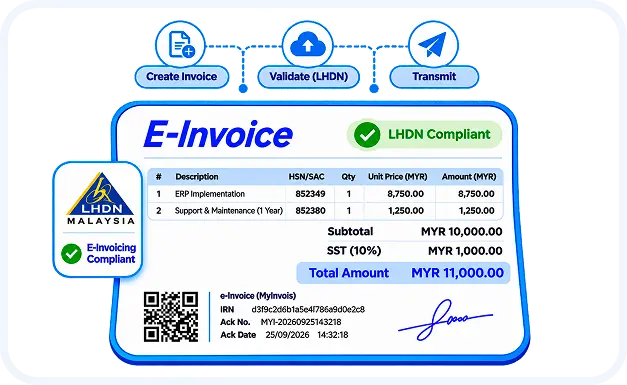
MyInvois is the electronic invoicing platform provided by the Inland Revenue Board of Malaysia (IRBM/HASiL). It allows businesses to submit structured e-Invoices for validation and supports the digital recording of business transactions.

Malaysia introduced e-invoicing through a phased implementation schedule:

  • 1 August 2024 for businesses with annual turnover or revenue exceeding RM100 million.
  • 1 January 2025 for businesses exceeding RM25 million and up to RM100 million.
  • 1 July 2025 for businesses exceeding RM5 million and up to RM25 million.
  • 1 January 2026 for businesses with annual turnover or revenue up to RM5 million, subject to applicable exemptions.

The exemption threshold was subsequently increased to RM3 million, effective 1 September 2026. Businesses should check the latest HASiL guidance to confirm their obligations.

Following HASiL's announcement on 30 August 2026, businesses with annual turnover or revenue below RM3 million are generally exempt from mandatory e-Invoice implementation, effective 1 September 2026. However, the exemption is subject to the applicable criteria and conditions. Certain business structures, activities and circumstances may affect eligibility, so businesses should refer to the latest IRBM e-Invoice Guideline and FAQs before determining their exemption status.

The RM3 million threshold is the exemption threshold announced by HASiL on 30 August 2026. Businesses with annual turnover or revenue below RM3 million are generally not required to implement e-Invoicing, subject to the applicable conditions. Businesses that meet or exceed the threshold must determine their implementation date according to the relevant IRBM rules and their financial-year information.

The MyInvois process generally involves the following steps:

  • 1. The supplier generates an invoice in its business or accounting system.
  • 2. The invoice is prepared in a structured XML or JSON format.
  • 3. The invoice is submitted to IRBM through the MyInvois Portal or API.
  • 4. MyInvois validates the submitted invoice.
  • 5. The supplier receives the validation response and shares the validated invoice with the buyer.
  • 6. The invoice can be tracked through the available MyInvois document and status functions.
The exact workflow depends on the transaction type and applicable IRBM requirements.

Yes. IRBM provides APIs that allow businesses to connect their ERP or accounting systems directly with MyInvois. The APIs support functions such as taxpayer TIN validation, document submission, invoice cancellation, rejection, document retrieval and status-related operations. This integration approach can help businesses automate invoice submission and reduce manual work.

HASiL provides an interim relaxation period for specified implementation phases. For taxpayers with annual turnover or revenue up to RM5 million, the published relaxation period extends until 31 December 2027. During the applicable period, businesses may use certain concessions, including consolidated e-Invoice treatment, subject to the conditions in the e-Invoice Specific Guideline.

Yes. E-invoicing workflows can be integrated with enterprise platforms such as Microsoft Dynamics 365 Finance & Operations, Dynamics 365 Business Central, Odoo and SAP, depending on the system configuration, API availability and integration requirements. Techcronus provides ERP integration and software development services to help businesses connect their existing applications with the MyInvois system.

Techcronus helps businesses assess their existing invoicing processes, map ERP data, configure integration workflows, connect business applications with MyInvois, test invoice submissions and provide technical support. Our implementation approach is planned around your existing systems, invoice processing requirements and business operations.

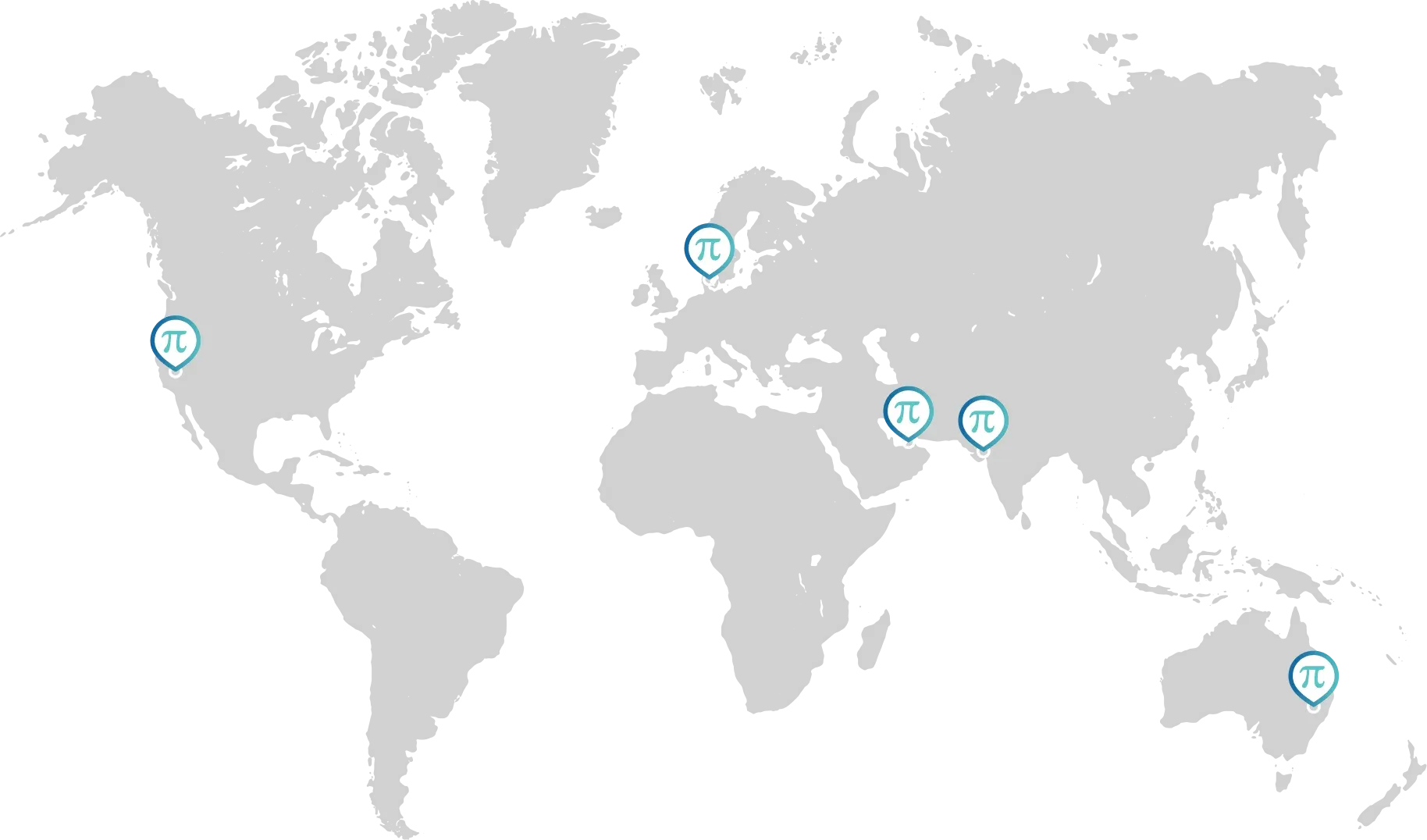
Our Global Presence

USA

USA

Techcronus Inc.

 |  +1 (415) 234 7510
3705 W Pico Blvd, Unit #606, Los Angeles, CA 90019, United States
UAE

UAE

Techcronus Middle East L.L.C-FZ

+971 52 901 6677
Meydan Grandstand, 6th floor, Meydan Road, Nad Al Sheba, Dubai, U.A.E.
Australia

Australia

Techcronus Australia Pty Ltd.

81-83 Campbell Street, Surry Hills, NSW 2010, Australia
India

India

Techcronus Business Solutions Pvt. Ltd.

AHMEDABAD

B-821, Stratum @ Venus Ground, Nehrunagar, Ahmedabad, Gujarat - 380015
+91 87809 28142

VADODARA

A-338, Atlantis K10 Sayaji Path, Alkapuri, Vadodara, Gujarat 390005
+91 93163 65248
Denmark

Denmark

roiit.dk

 |  +45 4043 9668
Solbjærget 45, DK - 3460 Birkerød
Our Global Presence